Marvel Rivals map-locked hero challenge
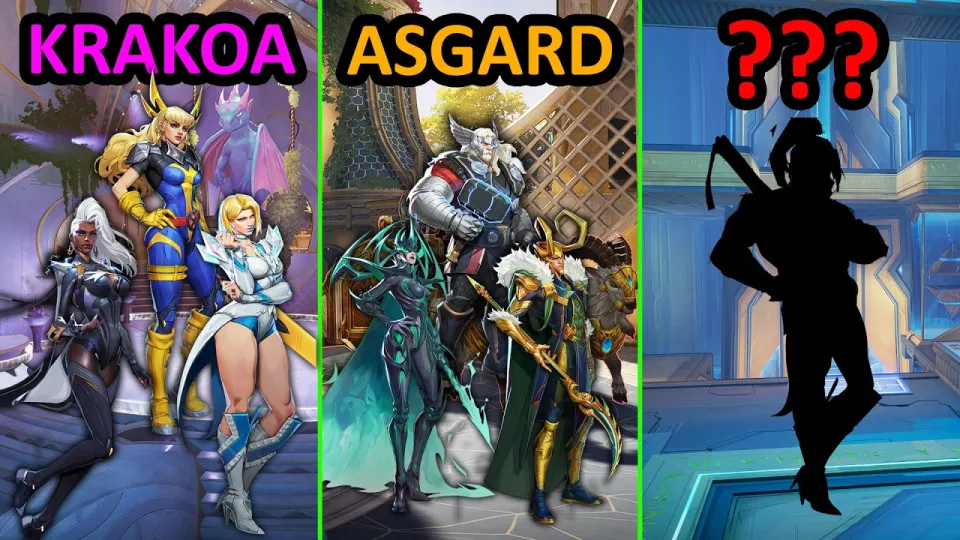
Video: The MAP Decides Our Heroes in Marvel Rivals
You can order the same kind of articles for your own video to boost it on YouTube and Google. Just message the Telegram bot @sat_sit_bot. It writes articles around your video, embeds the video and publishes them on popular niche websites (no ads). Try it free: 50 articles on us.
· based on the channel Salty Phish
Key takeaways
- The rule: each quickplay match in Marvel Rivals forces a hero pool chosen by the map you queue into, not by player preference.
- Klyntar maps lock the team to Venom-style symbiote picks; Asgard maps open Thor, Loki and Hela.
- Season 9, The Mystery of Thebes, was the live season when the challenge was recorded.
- Viewers pushed back on several map rulings, citing the Stark-Fujikawa building on Shin-Shibuya and Devil Dinosaur's New York home.
- The format works best in quickplay, where random map rotation keeps the hero pool shifting every match.
The Marvel Rivals map-locked hero challenge is a casual format where the map you queue into decides which heroes you are allowed to play. On a Klyntar map you run symbiote picks such as Venom; on an Asgardian map you can field Thor, Loki or Hela. The rule turns random quickplay rotation into a team-building constraint, and it is the premise behind Salty Phish's video breakdown, which you can follow live on Salty Phish's Twitch channel.
How the Marvel Rivals map-locked hero rule works
The format replaces player preference with geography: before the spawn doors open, the map name determines the legal roster. In practice that means three steps.
- Queue into quickplay so the map is random and nobody can counter-pick the arena.
- Read the map, then agree on the hero pool it implies — Klyntar means symbiotes, Asgard means Thor, Loki and Hela, and so on.
- Lock in only from that pool, even if the enemy team is running something your pick handles badly.
The constraint is what makes it interesting. Marvel Rivals normally rewards swapping to counter a composition; here the swap options are already narrowed by lore, so the team has to solve problems with a smaller toolbox. It also forces players onto heroes they would not normally touch, which is the point of a casual quickplay session rather than a ranked grind.
Which heroes fit which Marvel Rivals maps
The map-to-hero logic follows Marvel Rivals' own world-building, and the game gives plenty of hooks to build pools from. Asgardian arenas naturally open up the Norse roster. Klyntar, the symbiote homeworld, points at Venom and anything tied to the Knull storyline. Wakandan maps suggest Black Panther and characters connected to the Intergalactic Empire of Wakanda. Shin-Shibuya, the futuristic Tokyo map, suggests heroes with a 2099 or corporate-tech link.
The tricky part is that Marvel Rivals lore is broader than the obvious answer. The game's backstory places several characters in locations that are not their home turf — the Collector's museum, for instance, has housed more than one playable hero — so a strict reading of the map produces a bigger pool than a first glance suggests. That ambiguity is exactly where the challenge gets fun, and where the audience starts arguing.
The lore disputes the challenge keeps triggering
Map-based hero rules only work if everyone agrees on the lore, and viewers rarely do. The most common objections fall into a few recurring categories.
- Corporate geography. Shin-Shibuya includes the Stark-Fujikawa building, a future subsidiary tied to Iron Man, and the game even has dialogue referencing it. That is enough for many players to argue Iron Man belongs on the map.
- Timeline overlap. Because Shin-Shibuya sits in the 2099 era, characters associated with that future timeline — Punisher and Captain America among them — get suggested as legal picks.
- Off-map residents. Devil Dinosaur lives in New York with Moon Girl, so a Lower Manhattan map arguably should allow him, even though a dinosaur is not the first pick that comes to mind.
- Canon crossovers. In Marvel Rivals lore the Wakandans built Bucky's arm, and the Guardians of the Galaxy were dispatched from Wakanda on a mission tied to Klyntar, which widens both Wakandan and symbiote maps considerably.
- Cosmetic loopholes. Some players argue that skins tied to a location — Wakanda-themed outfits on heroes who are not Wakandan — should unlock those heroes for that map.
None of these disputes break the format; they are the content. A challenge like this lives on the argument about whether a pick is legal, not on the match result.
How to run the challenge with your own squad
A map-locked run needs a shared reference before the first queue, or the rules debate eats the session. Write down one or two legal heroes per map in advance and treat that list as final for the night. Keep it to quickplay so the map rotation stays random and nobody can dodge an unfavourable arena. Accept that some maps will produce a pool your team cannot play well — that is the challenge, not a bug. If you want a harder version, add a rule that no hero can be repeated across consecutive maps, which forces the pool to keep moving.
The format also pairs well with Marvel Rivals' team-up system: if the map allows a pair with an active team-up, take it, because the reduced roster makes synergy more valuable than raw individual strength.
Is the map rule worth trying in ranked?
No — and that is not a knock on the format. Ranked play in Marvel Rivals rewards adaptation and counter-swapping, and a self-imposed hero restriction removes exactly the tool that wins close games. The challenge is designed for casual sessions where the goal is variety and banter. Season 9, The Mystery of Thebes, was the live season when this run was recorded, complete with its new skins and battle pass content, and the casual framing fits that content cycle: try the new cosmetics, cycle through heroes you rarely touch, and let the map do the decision-making.
All the links from the video
- Live channel: http://www.twitch.tv/saltyphish/
- Twitter: https://twitter.com/SaltyPhish
- TikTok: https://www.tiktok.com/@saltyphish
- Reddit: https://reddit.app.link/r_SaltyPhish
- Instagram: https://www.instagram.com/saltyphish/
Final thoughts on the Marvel Rivals map challenge
The map-locked hero challenge is a simple rule that produces a lot of conversation: one arena, one narrow roster, and a running argument about which characters the lore actually permits. It suits quickplay, it suits a group that wants to stop defaulting to the same three picks, and it turns Marvel Rivals' map design into a gameplay mechanic rather than a backdrop. Salty Phish's breakdown of the run is the place to see how the rulings play out in real matches, and the channel's live stream at the Salty Phish Twitch channel is where the next session happens.
Questions & answers
Why do viewers say Iron Man should count on Shin-Shibuya in Marvel Rivals?
Shin-Shibuya includes the Stark-Fujikawa building, a future version of a Stark subsidiary, and the game includes dialogue that references the connection. For many players that corporate footprint is enough to make Iron Man a legal pick on the map, even though he is not a 2099-era character.
Should Punisher and Captain America be allowed on the 2099 Spider-Island map?
Both characters have 2099-associated versions in Marvel lore, which is the argument for allowing them. The counter-argument is that the map's identity is tied to a specific future timeline rather than to every character who has appeared in a 2099 story, so the ruling depends on how strict your group wants to be.
Do the Guardians of the Galaxy belong on Wakandan and Klyntar maps?
In Marvel Rivals lore the Guardians were sent from Wakanda on a mission connected to the symbiote situation on Klyntar, and the Milano can be seen leaving the Wakanda spaceport in map animations. That makes a case for allowing the whole team on both map types, with Venom as an optional stretch.
Is Devil Dinosaur a legal pick on Lower Manhattan?
Yes, by the lore: Devil Dinosaur lives in New York with Moon Girl, so a New York map fits him. The objection is purely about whether a dinosaur makes sense in the team composition, not about whether the character belongs to the location.
Source: The MAP Decides Our Heroes in Marvel Rivals · Markdown version